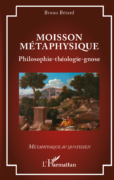
Briefly evoked in Metaphysics of Paradox, here is a reconsideration of Socrates’ famous statement, placed in the contemporary context of maximal entertainment and arguing that modern man should recover his capacity for wonder.
Contemporary man does not lack surprises: he is constantly receiving them. But does he still know how to wonder? From Pascal and Uexküll to Plato, Aristotle, Russell, Alquié, and Borella, rediscovering wonder means recovering that moment when what seemed self-evident becomes a question—and where philosophy, if not metaphysics, begins.
Entertainment Against Wonder
Never has man been surrounded by so many astonishing things, and never has he wondered so little. He can see someone on the other side of the world and converse with them instantaneously, dive beneath the sea and fly through space, converse with a machine…—and all this has become utterly commonplace. He would wonder if what he takes for granted ceased to be taken for granted; yet everything is taken for granted—at least as far as technology is concerned.
Certainly, this man is eager for surprises; he subscribes to permanent streams of novelty and becomes enthusiastic about competitions of every kind (songs, sports, baking…), but none of this has anything to do with wonder: it is pure entertainment! The surprise he craves requires something new, whereas wonder would discover the strangeness of what has always been there. Blaise Pascal (1623–1662) identified the reason for this terribly necessary entertainment, which “consists in the natural unhappiness of our weak and mortal condition, so miserable that nothing can console us when we think about it closely.”1
Imprisonment within the Umwelt
The animal’s Umwelt seems self-evident: each living species has its own world, which makes sense to it and determines it. An animal, for example, responds to stimuli from its environment (the barking dog) and explores or uses it according to its needs (the hen scratching the ground to uncover worms to eat). Uexküll’s (1864–1944) famous example2 concerned the two stimuli to which a particular kind of tick responds:
- Once fertilized, the female climbs onto a branch and, in response to an olfactory stimulus, drops onto a passing mammal. She will climb back onto a branch as many times as necessary;
- A tactile stimulus then enables her to find a place where the skin is free of hair; she pushes her “head” (her rostrum) beneath the skin, fills herself with blood, drops to the ground, lays her eggs, and dies.3
Responding to relevant stimuli and very selectively identifying what corresponds to the needs of its life: such is indeed the living creature’s own world, a very limited world, limited to what is useful for life.
At first sight, it may seem that man likewise fits into an Umwelt, each according to his environment. Think of the Australian Aboriginal, the inhabitant of the Amazon, the soldier of ancient Sparta, the Tibetan monk, the nomad of the steppes, all the way to the employee on Wall Street or in La Défense, or indeed the farmer of the Garonne, the child of Calcutta whose sole horizon is an immense rubbish heap, or a survivor in the Middle East amid the ruins of his city.
We can go even further. Human beings will, for the most part, position themselves in response to stimuli within the narrow field offered to them by the surrounding society: cricket in India, basketball in America, curling in Scotland, etc. Their freedom, illusory from this point of view, will consist in choosing whether they are “interested” in athletics or Formula 1. Likewise, among millions of artists, they will be fans of Elvis Presley, Tino Rossi, or Madonna. As a pet, they will have a dog or a cat. In politics, they will generally take a position in favor of one or another of the candidates standing for election or of the existing parties. Put a screen in their hands, and they will be absorbed by it for more than five hours a day (leisure use alone)4.
Certainly, there are the “marginal” ones, who will keep a snake as a pet, be fans of the Cuban singer Celia Cruz, “choose” pétanque, cast a blank ballot, play cards, and read newspapers. But this “marginality” rather confirms a response to a stimulus—even if a less commonplace one—which seems little different from that of the pregnant tick.
From Thinking About the World to Thinking the World
Unlike animals, man nevertheless always has a worldview, however elementary it may be. This is because he is naturally conscious of the world, even if for some this consciousness is most of the time absorbed by screens5, or, for others, by the incessant search for food. Nevertheless, this thought about the world, whether or not man has leisure, is generally sporadic and rudimentary, often arising in response to some circumstance, such as a funeral. Yet it is there, undeniably. Whether this thought endures or he abandons it, it will have occurred and taken its place in the mind.
Thinking the world is something else. It is only too obvious that, although they constitute a very small percentage of the earth’s inhabitants, there are nevertheless millions of philosophers and scientists working toward a better knowledge of the world, either according to their Weltanschauung—their worldview—or in order to forge one. And the mere fact that they do so applies to every human being, whatever his capacity to do so, for that capacity will never be nil. Except in cases of pathology, there is only one kind of human being, and it has been said that every man is a philosopher by nature and even, Schopenhauer (1788–1860) would say, a metaphysician.6
A Return to Wonder
Man—a philosopher by nature—can therefore recover his capacity for wonder and begin to philosophize.
The famous statement comes from Socrates (c. 470/469–399 BC), speaking with the mathematician Theaetetus: “wonder is a philosophical feeling; it is the true beginning of philosophy.”7
Before him, of course, some had already taken a step back from familiar things. Heraclitus (c. 544–480 BC), for example, observed that what appears is not the last word of reality. “Nature loves to hide,” he said.8
The same is true after Plato, beginning with Aristotle. He even made wonder an explanation of the historical birth of philosophy, retrospectively applying it to the earliest philosophers: “For it is owing to their wonder that men both now begin and at first began to philosophize.”9 He added, linking wonder to ignorance: “to perceive a difficulty and to wonder is to recognize one’s own ignorance.”10 This naturally echoes the famous Socratic maxim traditionally summarized as “All I know is that I know nothing.”11 By revealing ignorance, wonder sets intelligence in motion.
Aristotle even speaks of a “contrary wonder” when, having sought the causes, man arrives at knowledge: “We must end in the contrary and, according to the proverb, the better state, as is the case in these instances when men learn the cause: for there is nothing which would surprise a geometer so much as if the diagonal turned out to be commensurable.”12 Wonder can therefore arise from ignorance and then be reversed through knowledge: what initially caused wonder ceases to do so, while its contrary becomes astonishing.
Of course, this initial philosophical wonder is attested throughout the history of philosophy. The philosopher Jeanne Hersch (1910–2000) traced it from the Presocratics to Jaspers13, providing so many illustrations of its perennial philosophical relevance. Wonder is “that capacity to question a blinding self-evidence, that is, one that prevents us from seeing and understanding the world closest to us.”14
We may add Bertrand Russell (1872–1970): if philosophy “cannot answer as many questions as we could wish,” it has at least the merit of asking questions that increase our interest in the world and reveal “the strangeness and wonder lying just below the surface even in the commonest things of daily life.”15
The philosopher Ferdinand Alquié (1906–1985) adds another nuance to this wonder, suggesting a certain madness involved in becoming a philosopher: “No one would become a philosopher if he were not first a little mad; by this I mean if he were not led by some feeling of unreality experienced before things to ask himself questions that reasonable people do not ask.”16 More than “I wonder at what is,” it is almost: “what is no longer seems self-evident to me.” Why does anything exist? Why am I me? What is time? Why is reality real? To someone perfectly adapted to the ordinary world (his Umwelt, or own world), such questions may indeed seem a little “mad” to some.
With the philosopher Jean Borella (1930–), we discover that wonder can lead to a properly metaphysical discovery: philosophical wonder distinguishes Being from beings. It is a wondering human being who becomes aware of this forgetting; he is therefore that being which always already has a certain understanding of Being—not knowledge, certainly, but a certain implicit understanding of what “to be” means. Such an understanding opens onto one of the most essential metaphysical questions.
The Role of Philosophy
As we can see, philosophy does not consist in discovering extraordinary things, but in rediscovering how extraordinary ordinary things are. To realize that things are not self-evident, to question their existence, is simply to begin to think.
Footnotes
- Fragment Divertissement no. 4 / 7, Port-Royal edition: Chap. XXVI – Misère de l’homme: 1669 and Jan. 1670, pp. 203–217.[↩]
- The biologist and philosopher Jakob von Uexküll, Mondes animaux et monde humain, Pocket, 2004.[↩]
- This example, characteristic of the animal’s Umwelt, is frequently cited: Max Scheler, Heidegger (cf. The Fundamental Concepts of Metaphysics), Georges Canguilhem (cf. Knowledge of Life), Gilles Deleuze, Giorgio Agamben, and many other contemporary philosophers: Peter Sloterdijk, Baptiste Morizot, Augustin Berque, Florence Burgat, Vinciane Despret, etc.[↩]
- NordVPN, survey conducted in four countries among 5,000 adults between June 22 and 30, 2021.[↩]
- Fifty-six hours a week, according to NordVPN.[↩]
- Arthur Schopenhauer, The World as Will and Representation, p. 1520 (online).[↩]
- Plato, Theaetetus, 155d (trans. V. Cousin), Paris: Bossange, 1824, vol. II, p. 74.[↩]
- Fragment B123 (Diels-Kranz).[↩]
- Metaphysics, A, 2, 982b12–21 (Tricot translation, Vrin edition).[↩]
- Ibid. “But to ask oneself questions and to wonder at phenomena is already to know that one is ignorant of them” is the translation of Barthélemy Saint-Hilaire (Paris: Germer-Baillière, 1879, vol. I).[↩]
- More precisely, in Plato, Apology of Socrates, 21d: “what I did not know, I did not think I knew either!” (trans. Léon Robin). It is the renunciation of claiming to know what one does not know.[↩]
- Metaphysics, A, 2, 983a11–20, concerning the incommensurability of the diagonal of a square with its side.[↩]
- The Presocratics, Socrates, Plato, Aristotle, the Epicureans, the Stoics, St. Augustine, Thomas Aquinas, Descartes, Spinoza, Leibniz, Locke, Kant, Hegel, Comte, Marx, Freud, Bergson, Kierkegaard, Nietzsche, Husserl, Heidegger, Jaspers. Cf. Jeanne Hersch, L’étonnement philosophique. Une histoire de la philosophie, Paris: Gallimard, 1993.[↩]
- Cf. Jeanne Hersch, L’étonnement philosophique. Une histoire de la philosophie, Paris: Gallimard, 1993.[↩]
- The Problems of Philosophy (1912), Chapter XV, “The Value of Philosophy.”[↩]
- “Le philosophe et le fou,” in Jean-Robert Armogathe and Giulia Belgioso (eds.), Descartes metaphysico. Interpretazioni del Novecento: seminari di studi cartesiani, Florence: Istituto della Enciclopedia Italiana, 1993, pp. 107–116, p. 114.[↩]