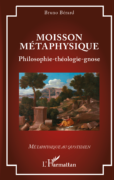
During an extended conversation with Ali Lakhani—published in Sacred Web—this concise definition of metaphysics, as we understand it, emerged.
Questions
What exactly is metaphysics? A philosophical discipline1, a form of knowledge reserved for a privileged few, or a quest for truth accessible to everyone? Behind this often intimidating word lies a question that concerns each of us: how far can human thought go in its search for reality? And what if metaphysics were less a doctrine to adopt than a path to discover?
Answers
The metaphysical approach engages the human intellect, which is ultimately called upon to efface itself, allowing the human spirit to pass from conceptual thought to the contemplation of essences and, more generally, of the realities that concepts can only suggest2.
This is why the metaphysical approach is universal. However, when metaphysics constitutes itself as a closed or dogmatic system, it turns away from its ultimate vocation; it then becomes merely a conceptual philosophical system, with the advantage of being rationally communicable, but with the limitation inherent in reason itself: its inability to attain the suprarational.
This is why poetry (Jean Biès), paradox (Bérard), or certain mystical writings (St. John, St. Dionysius the Areopagite, Meister Eckhart…) may sometimes open the way to the suprarational more directly than a strictly logical exposition.
There is a reason for this: metaphysics is not an intellectual construction arising from a power of the human spirit granted only to a privileged few. Rather, it rests upon a universal disposition of the human spirit to receive sense, meanings, and, ultimately, the meaningfulness of being (Plato, Borella). This is always something given and received, and it makes every human being a metaphysician (Schopenhauer), even if unconsciously so.
The counterpart of the universality of the human metaphysical disposition is that no formally constituted metaphysics can claim to express truth in a universally adequate manner. Certainly, some metaphysical principles may be universal, but no particular doctrinal formulation can claim to exhaust them. Above all, the possible universality of a metaphysical principle implies neither the universality of the particular doctrine that formulates it nor the exhaustive adequacy of that formulation to the reality it designates.
The difficulty is not to acknowledge the possibility of metaphysical intellection, but to determine what authority may be accorded to doctrines that claim to derive from it. For the authenticity of suprarational knowledge, even assuming it to be established, guarantees neither the adequacy of its conceptual formulation nor, above all, the possibility of universally verifying the validity of that formulation.
For my part, while acknowledging the genius of the great metaphysicians and philosophers, from the ancient thinkers Plato and Aristotle to the modern Guénon, Schuon, and Borella, I remain reluctant to embrace overly systematic doctrinal constructions. This is not because I fail to recognize their intellectual power, but because the ultimate vocation of metaphysics seems to me to be that of leading the spirit beyond the concepts that have guided it.
Indeed, metaphysics is called upon to efface itself when it leads the spirit from concepts to the realities they designate or suggest. If metaphysics remains confined to its conceptual constructions, it seems to me vain and mistaken about its own nature.
Certainly, the coherence of its formulations is indispensable to their intellectual acceptability, but coherence alone is insufficient to guarantee their truth. The passage to the suprarational constitutes both the culmination of the metaphysical approach and, simultaneously, the self-dissolution of its conceptual mediation.
Metaphysical antidogmatism is not antimetaphysical. It by no means rules out doctrines, but refuses to confuse them with the truth they seek to express. In this sense, metaphysics cannot constitute itself as a dogmatic system without contradicting itself.
It must also be made clear that this passage cannot result from the powers of the human intellect alone. It requires grace, which does not merely add to the knowledge the intellect already possesses, but brings about its inner transformation. This is what Jean Borella calls the “pneumatization of the intellect”: the passage from knowledge that is still speculative to knowledge that is effective, in which the intellect, vivified by the Spirit, participates in the reality it had hitherto merely conceived. Metaphysical realization is therefore not a conquest of the intelligence, but the fulfilment of a disposition to receive what transcends it. Thus, although the metaphysical disposition is universal, its effective realization is neither automatic nor guaranteed by that disposition: it remains dependent upon grace.
Thus, metaphysics reaches its fulfilment when it discovers that it was not merely knowledge to be acquired, but a path to be followed, whose ultimate end is the effacement of the very one who claims to know.
It has been said that theology, without metaphysics, would be nothing. If this refers to the metaphysics intrinsic to all theology, that goes without saying. But if it refers to a formalized metaphysics serving as the standard for all theology, caution is called for. If the intuition of metaphysical principles is open to every human being, every constituted doctrine remains a formulation of truth situated within a particular perspective. This is why, in Christianity, no particular theology can claim to offer a definitive and exhaustive formulation of the divine mystery.
Certain esotericists are known for their sometimes arrogant elitism: the uninitiated are then referred to as mere “men in the street.” Yet some metaphysicians are not immune to the same tendency when they construct formal systems presented as universal.
If theology cannot dispense with metaphysical understanding, metaphysics, conversely, cannot claim to take the place of Revelation. The intuition of universal principles does not entitle any particular doctrinal formulation to establish itself as the absolute measure of all revealed truth.
In conclusion, one might say that metaphysics is universal through the disposition of the human spirit that makes it possible, necessarily limited in its doctrinal formulations, and called upon to efface itself in the realization, through grace, of that which it can only designate.
Footnotes
- On the academic teaching of metaphysics, see the paper “Meeting with Bruno Bérard“[↩]
- see the paper “Reason and Intelligence, the Two Faces of the Mind“.[↩]